Hurricane Isaias came ashore near Destin on the night of October 9 as a Category 2 storm. A tide gauge at Panama City Beach was already reading 5.6 feet above normal before landfall, and more than 300,000 Floridians lost power. A lot of our neighbors along the Panhandle are still digging out. If you came through it in decent shape, your first thought is probably the same as mine: how do I help?
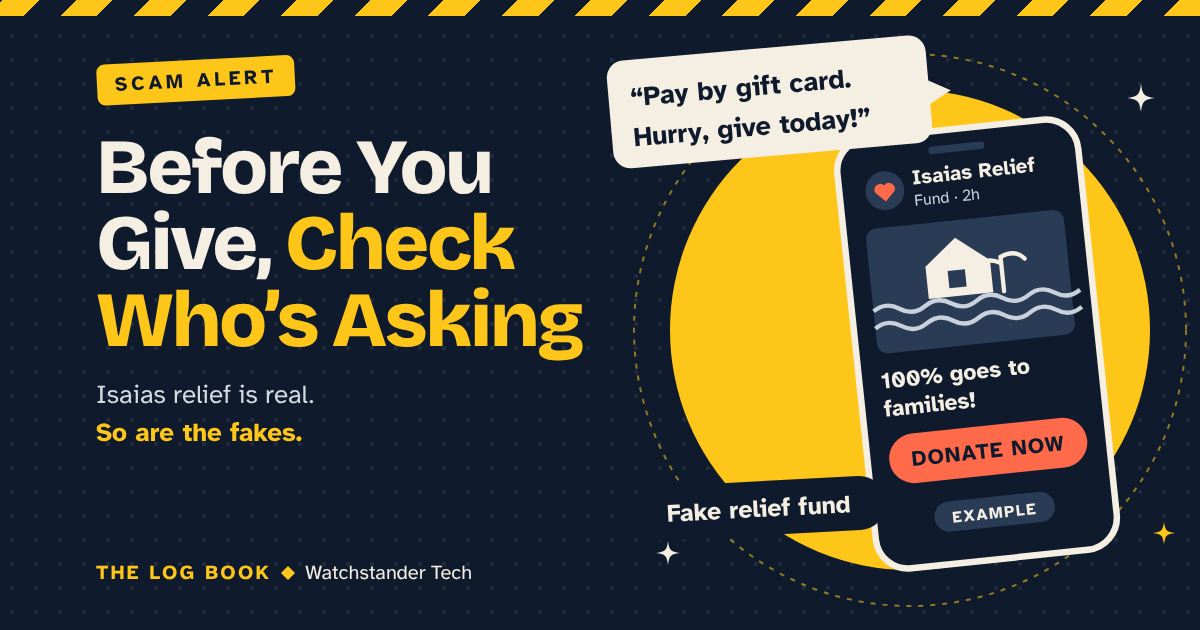
That generous instinct is exactly what a certain kind of scammer waits for. After every big storm, fake relief funds pop up within hours. They look like the real thing, they use real photos of real damage, and they take money that never reaches a single family. Before you give, please review what these look like and how to check who's asking. It takes about two minutes.
**What a fake relief fund looks like**
Most of them show up where we already spend our time: a post in your Facebook feed, a text, a phone call, or a crowdfunding page a friend shared. They tend to have three things in common.
*A borrowed name.* The Federal Trade Commission warns people to "watch out for names that only look like real charities." Scammers pick a name that sounds official, or one a letter or two away from a group you've heard of, and pair it with storm photos lifted from the news.
*A rush.* "Give in the next hour." "Families are waiting tonight." The IRS points out that real charities will gladly accept your donation at any time, so pressure to give right now is a warning sign in itself. The rush is there to stop you from checking.
*An odd way to pay.* This is the clearest tell. The FTC's advice is simple: "Don't donate to anyone who insists you pay by cash, gift card, wiring money, or cryptocurrency." A real charity is set up to take a credit card or a check. Someone who wants gift card numbers is not running a relief effort.
**How to check, in about two minutes**
You don't need special skills for this. You just need to go look it up yourself instead of trusting the post, the text, or the caller.
1. **Get the exact name.** Ask for the charity's full name, website, and mailing address, then look them up on your own. Don't use a link or phone number from the message.
2. **Check that it's registered in Florida.** Charities that ask for donations in Florida generally have to register with the Florida Department of Agriculture and Consumer Services. You can look one up with the department's Check-A-Charity tool at FloridaConsumerHelp.com, or call 1-800-HELP-FLA (1-800-435-7352) and ask whether a charity is properly registered.
3. **See what others say.** The FTC suggests checking the BBB Wise Giving Alliance (Give.org), Charity Navigator, CharityWatch, or Candid, and searching the charity's name with the words "complaint" or "scam."
4. **If the tax deduction matters to you,** the IRS has a free Tax Exempt Organization Search on IRS.gov that shows whether a group can receive tax-deductible gifts.
Then, when you give, pay by credit card. The FTC notes that a credit card offers more protection than other payment methods. If you prefer to donate by text, confirm the number on the charity's website first.
**A word about crowdfunding**
Crowdfunding pages are how many families will ask for help in the coming weeks, and many are completely legitimate. But anyone can make one. The FTC's guidance is that giving to someone you personally know and trust is safest. If you don't know the person, give through an established charity instead, or check the platform's own rules about how it verifies fundraisers.
**For small businesses**
Many local shops will run collections this month, and that's a wonderful thing. If you do, please choose an established charity, send the money directly to it, and let your customers knowwhere it went. If your business gets a call asking you to sponsor a relief drive, the same rules apply: get the exact name, look it up yourself, and never pay with gift cards.
**If you think you gave to a fake**
Call your credit card company or bank right away and ask about disputing the charge. Then report it. Florida's Attorney General takes reports at 1-866-9NO-SCAM, and you can tell the FTC at ReportFraud.ftc.gov. Reporting helps them warn the next person.
And with Giving Tuesday and the holidays just ahead, keep these habits close. The appeals will get louder from here, and the same two minutes of checking work just as well in December.
Our neighbors need help, and the real charities working here need donations. Give generously. Just give to people you've checked.
Stay sharp out there.
Andrew
← All posts
Before You Give, Check Who's Asking