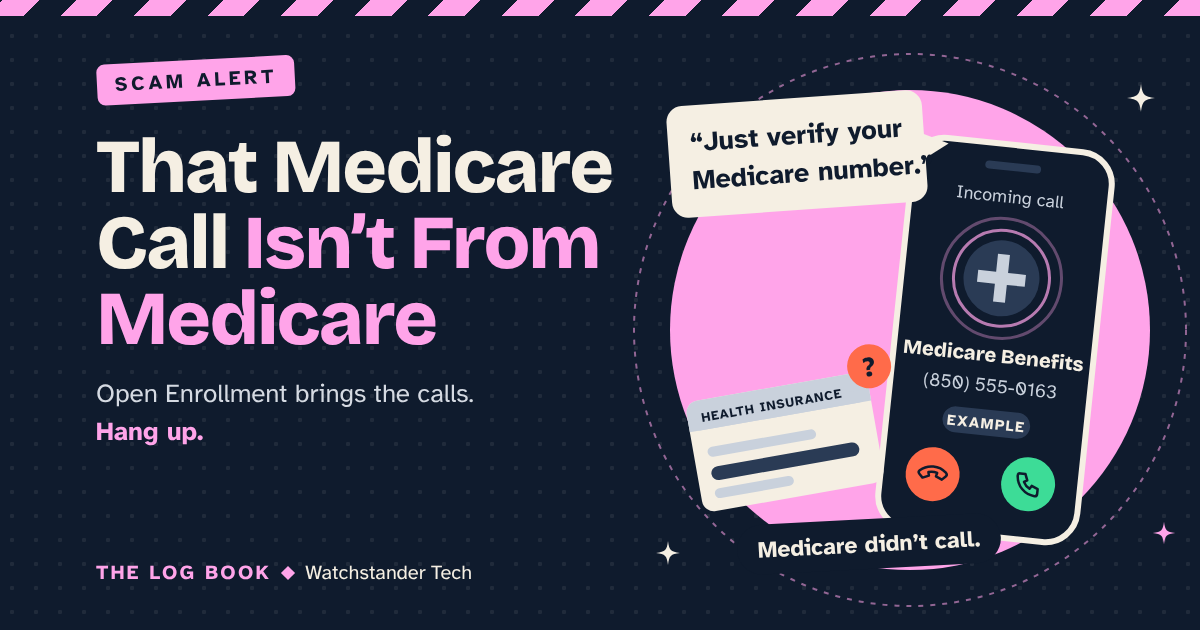
Medicare Open Enrollment runs from October 15 to December 7 this year, according to the Centers for Medicare & Medicaid Services (CMS). It's the window when people with Medicare can review their health and drug plans and switch for next year. It's also when the phone starts ringing.
"Hi, I'm calling from Medicare. Your benefits are changing for 2027, and I just need to verify your Medicare number so there's no gap in your coverage." Or: "You qualify for extra dental and a free genetic screening. I can sign you up right now."
If your mom or dad is on Medicare, they'll get calls like these this fall. Will you, if you help someone manage their paperwork?
The rule that settles it
Here it is, straight from Medicare.gov: "Medicare will never call you to sell you anything or visit you at your home." Medicare or someone acting on its behalf calls only in limited cases, such as after you've joined a plan, reported fraud, or left a message. The Federal Trade Commission says the same thing another way: "Medicare doesn't call people unexpectedly and ask for your Medicare number or financial information."
And don't trust the caller ID. A scammer can make any name show up on your screen. I wrote about that in Yes, That Agent Is Real. The Caller Isn't, and the same trick works with "Medicare."
What they're really after
Your Medicare number. Once a scammer has it, they can bill Medicare for tests and equipment you never got. That's medical identity theft: someone using your health insurance information as if they were you. The Office of Inspector General at the Department of Health and Human Services (HHS-OIG) warns about one version in particular: "free" genetic screenings or cheek swabs offered by phone, at booths and health fairs, or door-to-door. The real goal is your Medicare information. If Medicare denies the claim, the OIG says you could be billed for the full cost, which "could be thousands of dollars."
Your plan. Some callers want to switch you into a plan that pays them, not one that fits you. Medicare.gov's advice is simple: don't join a Medicare health or drug plan over the phone unless you called and asked for help. Watch for pressure to sign up immediately, and for vague promises of extra dental or drug coverage with few details. And don't accept offers of money or gifts for free medical care, which Medicare.gov also warns against.
These calls work because Open Enrollment is real, the deadline is real, and the mail about plan changes really is confusing. The scammer doesn't have to invent a reason to call. The calendar hands them one.
Who should have your number?
According to Medicare.gov, your Medicare card and number go to your doctor and people who should have them, such as insurers acting on your behalf or your State Health Insurance Assistance Program (SHIP). That's it. Treat that number like a credit card number.
In Florida, the SHIP program is called SHINE (Serving Health Insurance Needs of Elders). It's run by the Florida Department of Elder Affairs and your local Area Agency on Aging, and its trained volunteers give free, unbiased, confidential help comparing plans. You can reach SHINE at 1-800-96-ELDER (1-800-963-5337).
Compare plans the safe way.
If you're happy with your coverage, CMS says people who want to keep their current coverage generally don't need to re-enroll. If you want to shop, you make the first move: use the Medicare Plan Finder on Medicare.gov, call 1-800-MEDICARE, or schedule an appointment with a SHINE counselor. When you start the call, you know who's on the other end.
Check your statements
Medicare.gov suggests comparing the services on your calendar with your Medicare statements, and you can set up a secure Medicare.gov account to see Original Medicare claims as they're processed. A charge for a test or equipment you never got is a sign someone has your number.
For small businesses
If you run a business that serves older customers, such as a pharmacy counter, a home-care agency, or a senior center, print the four steps below and post them where people wait. A flyer by the register can stop a call before it starts.
What to do
- Hang up on Medicare calls you didn't ask for. Medicare won't call to sell you anything.
- Guard your Medicare number. Only your doctor, your plan, or SHINE should need it.
- Compare plans yourself. Medicare.gov's Plan Finder, 1-800-MEDICARE, or a free SHINE counselor.
- Check your Medicare statements. Anything you didn't get, report it.
If you already gave out your number
Call 1-800-MEDICARE (1-800-633-4227) and tell them what happened. You can also report it to the HHS-OIG hotline at tips.hhs.gov or 1-800-447-8477, and to the FTC at ReportFraud.ftc.gov. If it involves a Medicare Advantage or drug plan, Medicare.gov also lists I-MEDIC at 1-877-7SAFERX (1-877-772-3379). Then keep an eye on your statements for the next few months.
Stay sharp out there.
Andrew